Low buildouts, fast leasing
Small-bay suites are mostly open, reusable space, so tenant improvements are minimal, and the demand pool is maximized. Turnover is usually sweep, paint and welcome the next tenant, which helps space lease quickly.
The Patriot Flex Fund offers accredited investors an opportunity for geographic diversification, non-correlated returns to public equities, meaningful multi-year tax efficiency, targeted cash flow from the seed portfolio, and appreciation as the value-add business plan is executed across the portfolio.
Subscriptions open October 12, and Fund VI’s first close is targeted for October 27, 2026, with seed assets in two of America’s fastest-growing markets.
Getting in before first close has material benefits.
Institutions are only beginning to notice.
For forty years, institutional money went to the big boxes. One tenant, one lease, one credit rating. But that’s not how business typically gets done on the ground. Local businesses need a shop, and almost nobody was building it for them or running it well. That gap is where Fund VI invests. The Patriot Flex Fund will invest in existing small-bay flex properties, utilizing a value-add business plan and strategic roll-up strategy under one united brand, United Flex Parks, to create economies of scale across the portfolio.
of all U.S. industrial lease value signed in Q1 2026 went to small-bay
of U.S. industrial leases signed are under 50,000 SF
new U.S. business applications in July 2026 (+8.1% MoM); 531,728 in August 2026 (as of 9/11/26)
U.S. specialty-trade contractor establishments: electricians, plumbers, HVAC, roofers, concrete, employing ~5.3 million people
Sources: CoStar / Newmark Research via BKM Capital Partners, Q1 to Q2 2026; CBRE, Mar 2026; U.S. Census Bureau; CompStak; NAHB.
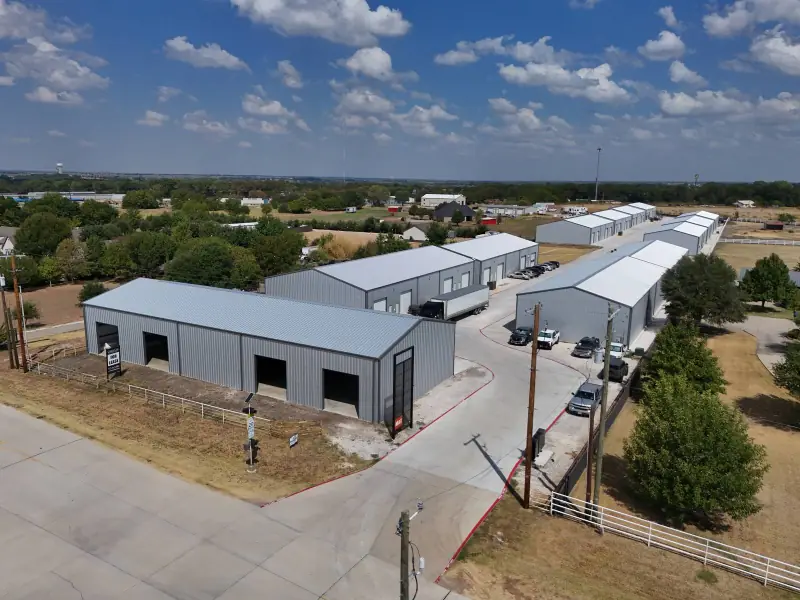
Small-bay suites are mostly open, reusable space, so tenant improvements are minimal, and the demand pool is maximized. Turnover is usually sweep, paint and welcome the next tenant, which helps space lease quickly.
Shorter lease terms let rents reset toward market every few years, rather than the long terms typical of big-box leases, with annual escalators in between. This structure can act as a hedge against inflation.
Rent comes from many small businesses instead of one or two large ones, so no single move-out is likely to sink the rent roll the way a big-box vacancy can.
Tenants are typically the contractors and home and professional service businesses local economies run on, and they need a shop close to their customers. That may help keep demand durable across cycles.
Small-bay is about 7% of industrial space under construction, and construction costs are up roughly 44% since 2020, which can make existing parks hard to replace. It’s unlikely a developer can replace our entry basis.
Many small-bay flex parks break even at roughly 25 to 30% occupancy, so a park bought in lease-up can still be cash flow positive with the right capital stack.
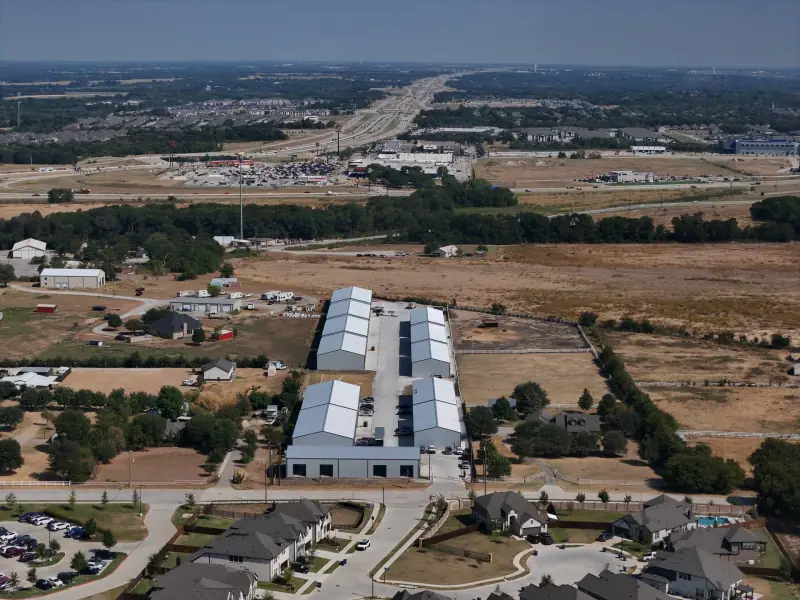
Two of America’s five fastest-growing cities sit in the Anna-Celina corridor north of McKinney. Collin County added 43,000 people last year, the second-largest gain of any county in America. Every new rooftop is a customer for somebody in these bays, and almost everything getting built is for the 20,000-foot user, while the 3,000-foot user often goes underserved.
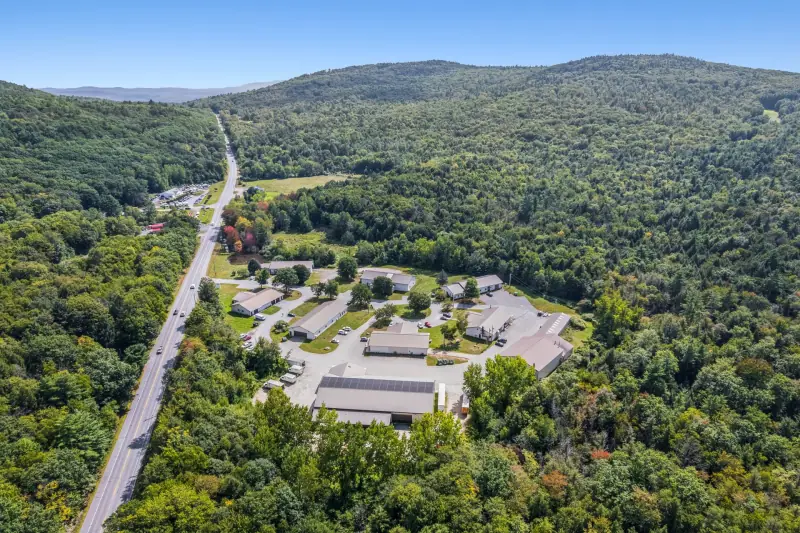
Greater Boston has lost 10.9M SF of industrial to conversion since 2011, and town-by-town zoning means little of it is likely to return. Demand is largely structural: the $76.6B Electric Boat award and CHIPS-funded defense expansions across the region rely on hundreds of subcontractors, many of whom work out of small bays.
Check out our Fund VI investment calculator to model your potential returns.
Accredited investors only. Calculator figures are targeted, not guaranteed.
Enter a commitment amount. Your share class — and its preferred return and waterfall split — is set automatically by commitment size, straight from the Fund VI model. Larger commitments earn better terms.
Share Class — Auto-Assigned
Waterfall for Class A-4
8.0% preferred → return of capital → 70/30 LP/GP split to a 15% LP IRR, then 50/50. No GP catch-up. No GP clawback.
Returning Patriot investors automatically advance one tier on a new commitment. Minimum investment $100,000. Projections are drawn from the Fund VI base-case model (seven-year hold, September 2026 to August 2033, sale in year 7); distributions are paid quarterly as available and include projected return of capital and exit proceeds. Pre-tax, targeted, not guaranteed.
| Year | Cash-on-Cash | Distribution | Cumulative |
|---|
Modeled cash timing: lease-up years run thin while NOI is built — unpaid preferred return accrues (non-compounding) and is caught up ahead of any profit split. Year 7 reflects the targeted sale of the portfolio. Cash-on-cash in years 1 and 2 is annualized on average equity outstanding, as capital is called over about 24 months; the dollar amounts are the distributions themselves. Source: Patriot Fund VI model, October 2026.
Fund VI offers a strategic way to potentially grow and diversify your investment portfolio.
Investors in the first close gain exposure to the fund’s seed portfolio, which is targeting 100% bonus depreciation on 2026 K-1s. Being first also allows new partners to begin accruing preferred return from the moment of funding.
First-close assets in Anna and Melissa, Texas, two of America’s fastest-growing markets.
Nearly all assets we define as small-bay flex remain owned by non-institutional investors, private owners, developers and operators. That leaves room to consolidate.
Key terms at a glance. Targeted figures are base-case projections, not guarantees. Full terms are set out in the fund’s confidential private placement memorandum.
Geographic spread across many small local tenants, from the HVAC crew, plumbing fleet and metal shop to the cabinet carpenter, landscaper, CrossFit gym, indoor batting cage, body shop and mechanic, with potentially non-correlated returns to public equities.
Meaningful multi-year tax efficiency, including targeted 2026 losses through bonus depreciation or accelerated depreciation.
Estimate your tax savingsDay one cash flow targeted with seed portfolio, aiming to grow as the value-add business plan is executed across the fund’s acquisition pipeline.
1, 3, and 5-year small-bay leases with annual escalators can be marked to market consistently.
Fund VI targets roughly 1:1 paper losses per equity dollar invested for 2026. See what that could mean at your federal tax bracket.
Accredited investors only. Targeted losses are not guaranteed. Not tax advice; consult your CPA.
Fund VI targets roughly 1:1 paper losses per equity dollar invested for 2026 through cost segregation and accelerated depreciation — passed 100% to investors, with K-1s targeted by April 1.
Federal Tax Bracket
We anticipate roughly 1:1 targeted losses per equity dollar invested for 2026, depending on timing of investment and assets placed in service. An investor’s ability to use losses depends on individual circumstances — real estate professional status or passive income generally required to offset; targeted losses are not guaranteed. Final depreciation schedules are subject to completed cost-segregation studies. Patriot does not provide tax advice — consult your CPA.
1 : 1A $1,000,000 commitment targets $1,000,000 of 2026 K-1 paper losses.
Potential savings = targeted losses × your federal bracket. State treatment varies. Depreciation reduces basis and is generally recaptured at sale; the benefit shown is a timing benefit — dollars working for you now instead of later.
Talk Through Your Tax PositionWith a 17+ year record and $435M+ in AUM, we have a proven approach to helping investors preserve and compound wealth through private real estate funds built for all economic climates.
From off-market sourcing through operations and strategy, Patriot keeps the work in-house, with expert asset management, disciplined execution and transparent reporting. Small-bay is simple for an investor to follow but demanding to run well at scale, and we believe that operating intensity is where our platform earns its edge.
More than 90% of Patriot’s asset base was acquired off market from a private seller we’ve developed a long-standing relationship with.
Patriot Holdings has generated an average 25%+ IRR for investors.
$500M+ transaction volume
Fund I, full cycle: 37%+ gross IRR and a 2.28x gross equity multiple, from inception to wind-down in 61.5 months.
Past performance is not a guarantee of future results.
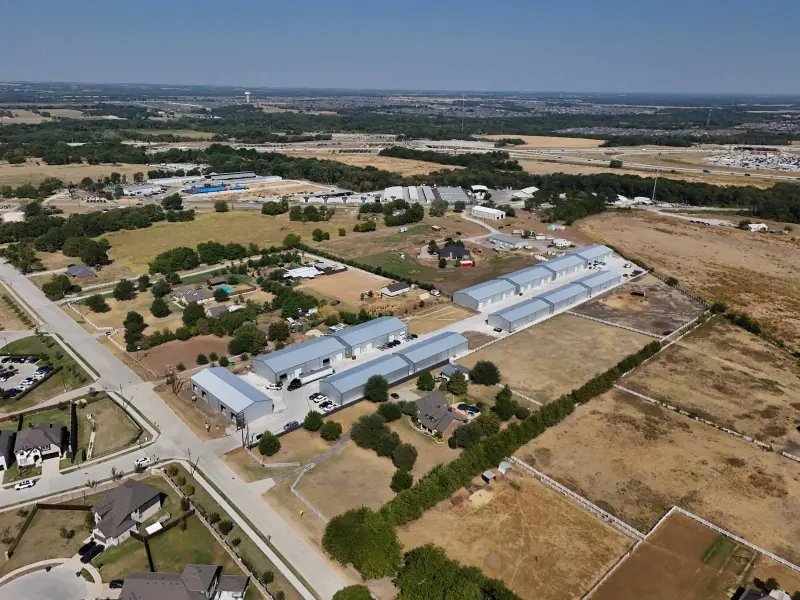
A discovery call with Investor Relations is the first step toward the Fund VI data room.
Accredited investors only · $100K minimum